
The Kitchen Remodel Timeline Nobody Talks About
A kitchen remodel is one of the most exciting investments you can make in your home. It's also one of the most misunderstood. Homeowners across Fort Lauderdale tell us the same thing: they know they want a new kitchen, but they have no idea what the process actually looks like from start to finish.
How long will it take? When will you lose access to your kitchen? What happens first — cabinets or countertops? These are the questions that keep people up at night, and honestly, they're the questions that keep some homeowners from ever starting the project at all.
At Metro General Contracting, we believe that understanding the process is the first step to enjoying it. So here's a realistic, phase-by-phase breakdown of what a kitchen remodel looks like — and how long each stage typically takes.
Phase 1: Design and Planning (2–4 Weeks)
Before a single cabinet is removed, there's a critical planning phase that sets the tone for everything that follows. This is where you'll work with your contractor to finalize the layout, choose materials, select finishes, and lock in the budget.
During this phase, you'll make decisions about:
- Cabinet style, color, and configuration
- Countertop material (quartz, granite, marble, butcher block)
- Backsplash tile and pattern
- Appliance selections and placement
- Lighting fixtures and electrical layout
- Plumbing fixture upgrades
This is also when your contractor will pull any necessary permits. In Fort Lauderdale, permits are required for most kitchen remodels that involve electrical, plumbing, or structural changes. A reputable contractor will handle this for you — and you should be cautious of anyone who suggests skipping it.
Pro tip: The more decisions you finalize during this phase, the smoother the rest of the project will go. Changes made after demolition begins are almost always more expensive and time-consuming.
Phase 2: Demolition (2–5 Days)
This is the part that feels the most dramatic. Old cabinets, countertops, flooring, and sometimes walls come out. If you're reconfiguring the layout, this is when that starts to take shape.
Demolition is loud, dusty, and fast. Your contractor should take steps to protect the rest of your home by sealing off doorways with plastic sheeting and covering floors in adjacent rooms. At Metro General Contracting, we treat your home like our own — that means containing the mess and cleaning up at the end of every workday.
Once demolition is complete, your contractor will assess the condition of the subfloor, walls, and existing plumbing and electrical systems. This is when hidden surprises sometimes appear — water damage behind walls, outdated wiring, or plumbing that doesn't meet current code. A good contractor will communicate these findings immediately and present solutions before moving forward.
Phase 3: Rough-In Work (1–2 Weeks)
This is the behind-the-scenes phase that most people don't think about, but it's arguably the most important. Rough-in work includes:
- Electrical: Running new wiring for outlets, under-cabinet lighting, and appliance circuits
- Plumbing: Relocating or updating supply lines and drains for the sink, dishwasher, and refrigerator water line
- Framing: Any structural changes, such as removing or adding walls, installing headers, or reinforcing load-bearing elements
In South Florida, this work must pass inspection before your contractor can close up the walls. These inspections are a good thing — they ensure that everything behind your beautiful new kitchen is safe and up to code.
Phase 4: Drywall, Painting, and Prep (3–5 Days)
Once the rough-in work passes inspection, the walls get closed up with new drywall where needed. Seams are taped, mudded, and sanded smooth. Then comes primer and paint.
This phase also includes any ceiling work, such as patching, adding recessed lighting trim, or installing a new ceiling texture. It might seem like a quiet phase compared to demolition, but it's setting the stage for everything that comes next.
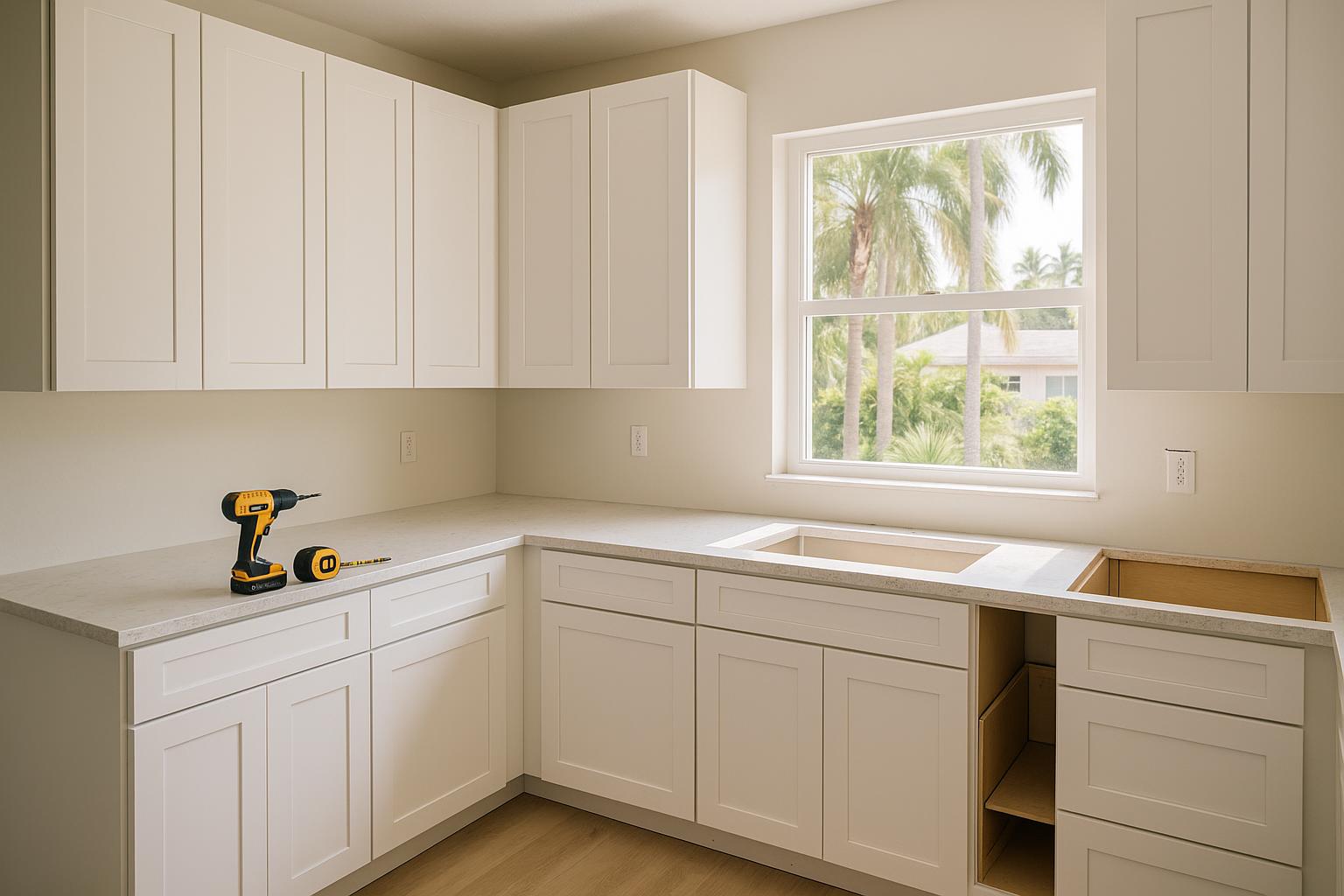
Phase 5: Cabinet and Countertop Installation (1–2 Weeks)
Now the kitchen really starts to come together. Custom cabinetry is installed first, carefully leveled and secured to the walls. This is precision work — even a fraction of an inch off can affect how doors close and drawers slide.
After the cabinets are set, countertops are templated (measured with exact precision) and then fabricated. There's usually a short wait between templating and installation, typically five to ten business days depending on the material. Quartz and granite are the most popular choices we see in Fort Lauderdale homes, and for good reason — they handle the humidity beautifully and resist staining.
Once countertops are installed, the sink and faucet go in, and the kitchen starts to feel real.
Phase 6: Backsplash, Flooring, and Finishing Touches (1–2 Weeks)
The final phase is where all the details come together:
- Backsplash tile is installed and grouted
- New flooring is laid (if it wasn't done earlier in the process)
- Appliances are set in place and connected
- Light fixtures, hardware, and trim are installed
- Final paint touch-ups are completed
Your contractor should do a thorough walkthrough with you at this stage, checking every detail from cabinet alignment to outlet covers. This is your chance to flag anything that needs adjustment before the project is officially complete.
So How Long Does a Kitchen Remodel Actually Take?
For a typical kitchen remodel in Fort Lauderdale, you can expect the entire process to take six to twelve weeks from demolition to completion. Larger projects with custom elements, structural changes, or high-end materials may take longer. Smaller updates — like refacing cabinets and swapping countertops — can sometimes be completed in as little as three to four weeks.
The biggest factors that affect your timeline include:
- Scope of work: A full gut renovation takes longer than a cosmetic refresh
- Material lead times: Custom cabinets and specialty countertops can take weeks to fabricate
- Permit and inspection scheduling: These are out of your contractor's control but should be factored into the plan
- Decision-making speed: Delays in choosing materials or changing plans mid-project can add weeks
How to Survive Without Your Kitchen
Let's be honest — living without a kitchen for several weeks isn't easy. Here are a few tips from homeowners in Pompano Beach, Oakland Park, and Wilton Manors who've been through it:
- Set up a temporary kitchen station in your dining room or garage with a microwave, toaster oven, and coffee maker
- Stock up on paper plates and disposable utensils to avoid washing dishes in the bathroom sink
- Plan meals that require minimal prep — salads, sandwiches, slow cooker recipes, and takeout from your favorite local spots
- If you have young kids, set expectations early and make it an adventure
The temporary inconvenience is worth it. Every homeowner we've worked with in the Fort Lauderdale area has told us the same thing once their new kitchen was finished: they wished they'd done it sooner.
Ready to Start Planning Your Kitchen Remodel?
If you've been thinking about transforming your kitchen, the best first step is a conversation. At Metro General Contracting, we walk you through every phase of the process so there are no surprises — just a beautiful kitchen you'll love for years to come. We proudly serve homeowners in Fort Lauderdale, Lighthouse Point, Lauderdale-by-the-Sea, and surrounding communities.
Reach out to schedule a free consultation, and let's talk about what your dream kitchen looks like.