
The Question Every Homeowner Asks First
If you're thinking about remodeling your kitchen, the first question on your mind probably isn't about countertop materials or cabinet finishes. It's this: How long is this going to take?
It's a fair question. Your kitchen is the most-used room in your home, and living without it for weeks — or months — can feel overwhelming. The good news is that when you understand the timeline and plan accordingly, a kitchen remodel doesn't have to disrupt your life nearly as much as you'd expect.
At Metro General Contracting, we walk Fort Lauderdale homeowners through every phase before a single cabinet is removed. Here's a realistic look at what the kitchen remodeling process involves and how long each stage typically takes.
Phase 1: Design and Planning (2–4 Weeks)
This is the phase most people underestimate, but it's arguably the most important. Rushing through design decisions is the number one reason remodels go over budget or end with regrets.
During this stage, you'll work with your contractor to:
- Establish a realistic budget and wish list
- Finalize the kitchen layout and workflow
- Select materials — countertops, cabinetry, backsplash, hardware, and fixtures
- Determine whether any structural changes are needed (removing a wall, relocating plumbing, etc.)
- Pull the necessary permits from the City of Fort Lauderdale
Permits are a detail that catches many homeowners off guard. In Broward County, most kitchen remodels that involve electrical, plumbing, or structural work require permits and inspections. A reputable contractor handles this for you, but it does add time to the front end of the project.
Pro tip: Order materials early. Custom cabinetry can take 4–8 weeks to arrive, and supply chain delays still affect certain products. Your contractor should help you place orders during the planning phase so materials are ready when demolition begins.
Phase 2: Demolition (2–5 Days)
Once permits are approved and materials are ordered or on-site, the real action starts. Demolition is fast, loud, and — for most homeowners — surprisingly exciting. Old cabinets, countertops, flooring, and sometimes walls come out quickly.
For a standard kitchen remodel in Fort Lauderdale, demolition usually wraps up within a week. If your project involves removing a load-bearing wall or rerouting major plumbing lines, it may take a few extra days.
During this phase, your contractor should set up dust barriers and protect the rest of your home. Living in your house during a remodel is completely doable when the work zone is properly contained.
Phase 3: Rough-In Work (1–2 Weeks)
This is the behind-the-walls stage that nobody sees but everyone depends on. Rough-in work includes:
- Updating or relocating electrical wiring and outlets
- Moving or adding plumbing lines for sinks, dishwashers, or refrigerator water lines
- Installing or modifying HVAC ductwork
- Framing any new walls or structural supports
Each of these trades requires its own inspection before the walls can be closed up. Scheduling inspections efficiently is one of the ways an experienced general contractor keeps your project on track. Delays here often come from coordination issues — another reason to work with a single company that manages every trade in-house or through trusted subcontractors.
Phase 4: Installation (2–3 Weeks)
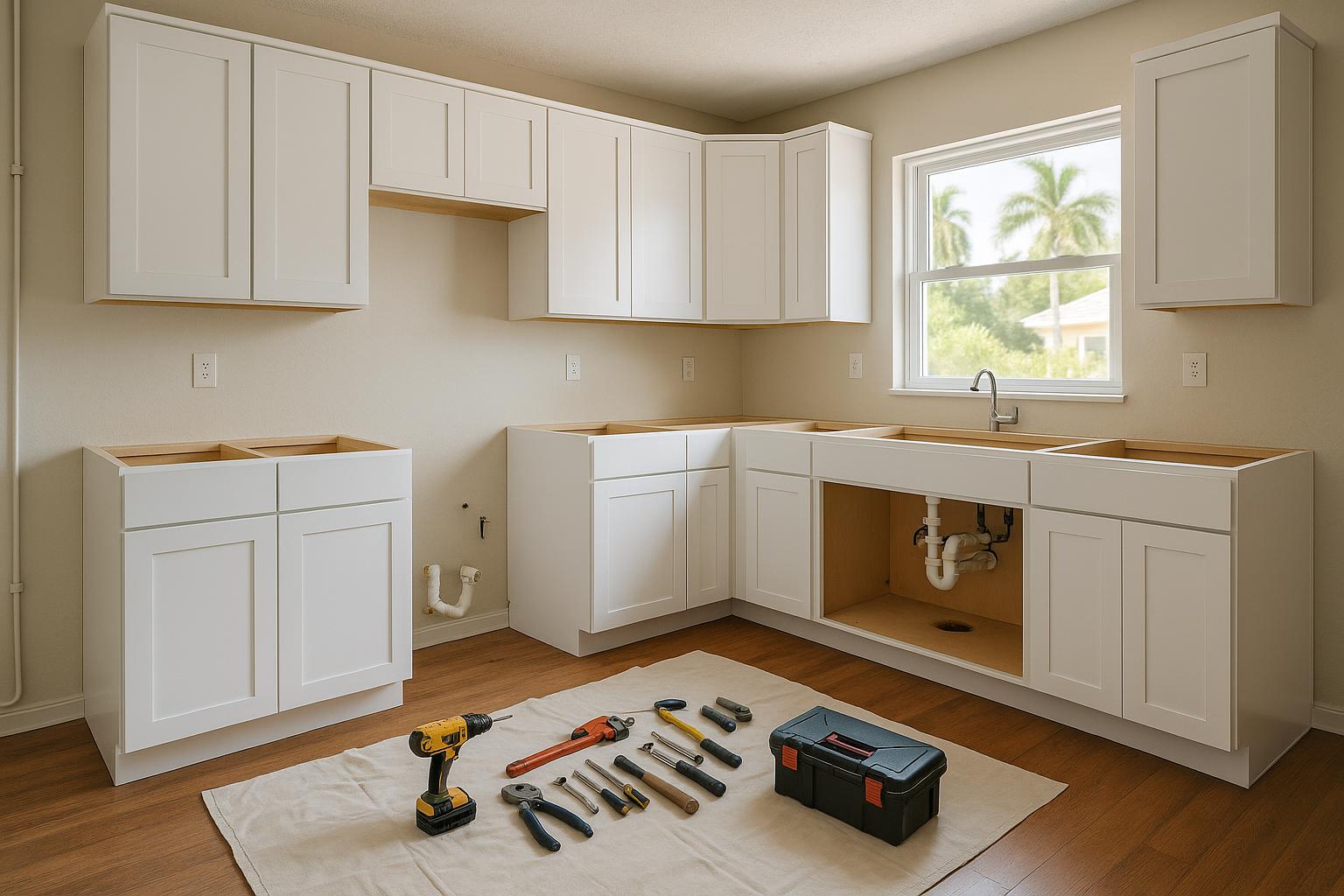
This is the stage where your new kitchen starts to take shape, and it's incredibly satisfying to watch. Installation typically follows this order:
- Drywall and patching — Walls are closed up, mudded, and sanded smooth.
- Cabinetry — Base and wall cabinets are installed and leveled with precision.
- Countertops — Templated and fabricated to fit, then installed on top of the base cabinets.
- Flooring — Depending on the material, flooring may be installed before or after cabinets. Your contractor will determine the best sequence for your specific project.
- Backsplash — Tile or other backsplash materials go up after countertops are set.
- Fixtures and appliances — Sinks, faucets, lighting, range hoods, and appliances are connected and tested.
In Fort Lauderdale's humid climate, it's worth noting that certain materials need time to acclimate before installation. Hardwood flooring, for example, should sit in your home for several days before it's laid down. A good contractor accounts for this in the schedule.
Phase 5: Finishing Touches and Final Walkthrough (3–5 Days)
The last stretch includes interior painting, trim work, cabinet hardware installation, caulking, and a thorough cleaning. Your contractor should then schedule a final walkthrough with you to review every detail.
This is your opportunity to flag anything that needs adjustment — a cabinet door that doesn't close perfectly, a paint touch-up, a fixture that's not quite right. A trustworthy contractor welcomes this step because it's the difference between a finished project and a truly finished project.
So, How Long Does a Kitchen Remodel Really Take?
For a typical full kitchen remodel, most Fort Lauderdale homeowners should plan for 6 to 12 weeks from demolition to completion. When you include the design and planning phase, the total process from first consultation to final walkthrough is closer to 10 to 16 weeks.
Several factors can push that timeline longer:
- Scope of work — A cosmetic refresh (new cabinets, counters, and paint) is faster than a full gut renovation with layout changes.
- Material lead times — Custom or imported materials take longer to arrive than stock options.
- Permit and inspection delays — These vary by municipality. Fort Lauderdale, Pompano Beach, and Oakland Park each have their own permitting offices and timelines.
- Unexpected discoveries — Older homes sometimes reveal outdated wiring, water damage, or code violations once walls are opened up. A good contractor communicates these issues immediately and presents solutions.
How to Keep Your Kitchen Remodel on Schedule
While some delays are unavoidable, there's a lot you can do as a homeowner to keep things moving:
- Make decisions early. Indecision during the project is the most common cause of delays that are within the homeowner's control.
- Choose your contractor carefully. Look for a licensed, insured general contractor with experience managing full remodels — not just individual trades.
- Communicate openly. Ask questions, share concerns, and stay engaged throughout the process.
- Set up a temporary kitchen. A coffee maker, microwave, and small fridge in another room will make the weeks without your kitchen much more manageable.
Ready to Start Planning?
At Metro General Contracting, we specialize in kitchen remodels that are thoughtfully planned, clearly communicated, and completed on schedule. We serve homeowners throughout Fort Lauderdale, Wilton Manors, Lighthouse Point, Lauderdale-by-the-Sea, and the surrounding communities.
If you're considering a kitchen renovation and want a clear, honest timeline for your specific project, reach out for a free consultation. We'll walk through your goals, assess your space, and give you a realistic plan — so you know exactly what to expect before anything begins.